Coals are the engine of a hookah session. You can have a $200 pipe and premium tobacco, and a badly lit coal will still make the whole thing taste like a bonfire. I’ve lit thousands of these, and the technique is simple — but a few details trip up almost every beginner, and a couple of shortcuts are genuinely dangerous. Here’s the whole method.
What’s the best way to light hookah coals?
An electric coil burner is the best way to light hookah coals — it’s what every lounge and every serious home smoker uses. A basic single-coil burner costs $15–25, lights a batch of three coals evenly, and doesn’t coat them in butane or lighter fluid the way an open flame can. Look for 1,000 watts or more; weaker burners drag the job past 20 minutes and often never properly light the coal’s middle.
The coals themselves matter too. This guide assumes natural coconut charcoal — flats or cubes — which is what I’d point anyone towards (see our guide to the best hookah charcoal if you’re still choosing a brand). Quick-lights are a different beast — more on those further down.
Can you light hookah coals without a burner?
Yes — a gas hob, camping stove or chef’s torch will all do the job. I’ve covered each method, and its quirks, in a separate guide to lighting hookah charcoal without a burner, so I won’t repeat them here. Everything below about ash coverage and safety applies exactly the same whatever your heat source.
How do you light coconut coals on an electric burner?
Place the coals directly on the coil, flat side down, turn the burner to its highest setting, and flip them once each side has ashed over. Step by step:
- Put the coals straight on the coil. Skip the frying pan some people balance on top — direct contact is faster and more even. Two or three coals at a time, sat where the coil glows hottest.
- Full power, and leave them alone. The first face takes 4–5 minutes. You’ll hear crackling and see the underside start to glow. That’s normal.
- Flip with tongs. When the bottom face is glowing and grey, turn each coal over. Cubes need standing on their remaining sides too; flats just need the one flip.
- Wait for full ash-over. The coal is done when every surface — every side, every corner — wears an even coat of grey ash. Not mostly grey. All grey.
That last step is the one everyone rushes, and it’s the whole game. I’d rather wait two extra minutes than start a session on a coal that’s nearly there.
How long does it take to light hookah coals?
Natural coconut coals take 8–12 minutes on a decent electric burner — roughly 4–5 minutes per side for flats, a little longer for cubes. A weak burner or an overloaded coil can stretch that to 15. Quick-light coals catch in under a minute, but still need another 2–3 minutes for the chemical accelerant to burn off completely before they’re usable. My routine: coals on the burner first, then pack the bowl while they light — the timing works out almost perfectly.
How do you know when a coal is fully lit?
A fully lit coal is covered in grey ash on every surface and glows orange at the core — blow on it gently and the whole thing should flare red. Any black patch, however small, is unburned charcoal, and it will make itself known.
A half-lit coal ruins a session in two ways. First, taste: that black patch finishes burning over your tobacco instead of on the burner, and you inhale it — an acrid, ashtray note that no amount of good shisha can hide. Second, and more seriously, health. Burning charcoal gives off carbon monoxide — the CDC flatly warns never to burn charcoal indoors, whatever colour the coal is — and a coal that’s still catching is at the dirtiest stage of its burn. Light your coals near an open window or an extractor fan, keep the room ventilated while you smoke, and if a headache or dizziness creeps in mid-session, stop and get fresh air.
Why do serious smokers avoid quick-light coals?
Because the chemical accelerant that lets them spark up from a lighter never quite leaves the flavour, and they burn hotter and die faster than coconut coals. Quick-lights have their place — camping, festivals, anywhere without electricity — but for home sessions they’re a false economy. I’ve set out the full comparison in coconut vs quick-light charcoal.
If you do use one: hold it in tongs, light the edge, and let it spark and fizz until the whole disc has stopped smoking and turned grey — outdoors if at all possible. The classic mistake is putting it on the bowl while the accelerant is still burning. That’s the chemical taste people wrongly blame on the tobacco.
Where do the coals go once they’re lit?
Lit coals go on the outer edge of the bowl, never the centre. The middle of the bowl drives heat straight down into one spot and scorches the tobacco within minutes; the edge heats the packed shisha evenly and leaves room to rotate the coals later. Two flats on opposite edges is my starting point for most bowls, with a third added only if the smoke is thin.
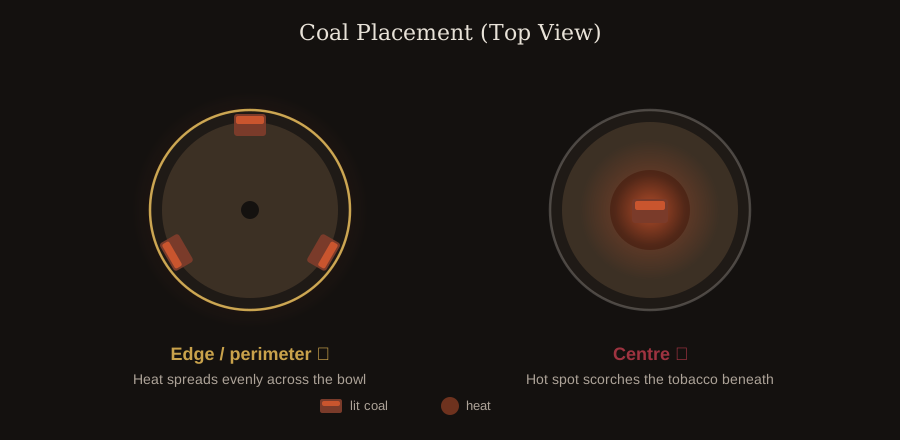
Give the coals a quarter-turn around the rim every 10–15 minutes, and tap the ash off with your tongs when it grows thick — a jacket of ash insulates the coal and drops the heat. If you’re smoking with a Lotus-style device instead of foil, the same edge-first logic applies; our heat management devices guide covers how they change things.
What should you never do when lighting coals?
Never light natural coals with a regular lighter, never microwave any coal, and never walk away from coals while they light. The full list of things I’ve watched go wrong:
- A regular lighter on naturals. Coconut charcoal needs sustained high heat. A lighter chars one corner, burns your thumb and leaves you a coal that’s lit on the outside and cold in the middle.
- The microwave. Charcoal in a microwave can spark, catch fire and wreck the appliance — and you still won’t get an evenly lit coal. There is no version of this that works.
- Leaving coals unattended. A glowing coal can spit fragments, and a hot burner will ignite whatever slides up against it. Stay in the room.
- Lighting indoors with no airflow. The lighting stage is the worst for fumes. Crack a window at minimum.
- Rushing half-lit coals onto the bowl. Covered above, but it’s the most common mistake of the lot.
How do you handle lit coals safely?
Handle lit coals only with proper hookah tongs, over a heat-safe surface, in a ventilated room. A lit coal is hot enough to scar skin on contact and burn straight through laminate, cloth or a plastic tray. My setup: a metal tray under the burner, tongs that actually grip (the flimsy pair bundled free with most hookahs doesn’t), and a route from burner to bowl that never passes over carpet, laps or pets. When the session ends, spent coals go into a metal container to cool completely — a coal that looks dead can hold heat at its core for a surprisingly long time. Never bin them warm.
Frequently Asked Questions
How long does it take to light hookah coals?
Natural coconut coals take 8–12 minutes on an electric coil burner, flipped partway through for even coverage. Quick-lights ignite in under a minute but need another 2–3 for the accelerant to burn off. Stove and torch methods land somewhere in between.
How do you know when hookah coals are ready?
Coals are ready when every surface is coated in grey ash and the core glows orange — blow gently and the whole coal should flare red. Any remaining black patch means it needs more time on the burner.
Can you light hookah coals with a lighter?
Only quick-light coals — that’s what the accelerant coating is for. Natural coconut coals can’t reach temperature from a lighter flame; you’ll end up with a corner-lit coal that tastes harsh and dies early. Use a coil burner, or a stove or torch if you’re without one.
Can you microwave hookah coals?
Absolutely not. Charcoal in a microwave can spark and catch fire, the coal won’t light evenly anyway, and you’ll likely ruin the microwave in the process. Of all the shortcuts people try, this is the one to rule out completely.


