
Why Does the Number of Hoses Matter?
If you have ever browsed hookahs online or walked into a shisha shop, you have probably noticed that some hookahs come with one hose and others come with two, three, or even four. It seems like a straightforward choice -- more hoses means more people can smoke at once, right? Well, technically yes, but there is a lot more going on under the surface that most people never consider, and it genuinely effects the quality of your smoke session in ways you might not expect.
The single hose vs. multi-hose debate has been around for as long as modern hookahs have existed, and having spent years smoking on both setups I have a pretty firm opinion on which one comes out on top. But let me walk you through the differences properly so you can make your own call.
How Does a Single Hose Hookah Actually Work?
A single hose hookah is exactly what it sounds like -- one stem, one hose port, one person drawing at a time. The beauty of this setup is that when you pull on the hose, all of the suction goes directly through the bowl and down through the water. There is no air leaking out of unused ports, no shared draw, nothing splitting the airflow. You get the full, unrestricted pull every single time.
This is why single hose hookahs have always been the standard in traditional Middle Eastern smoking culture. The hookah gets passed around the group, one person smokes at a time, and every draw is as thick and flavourful as it should be. It is a social thing in itself -- passing the hose is part of the ritual, part of the conversation.
From a technical standpoint, the simplicity of a single hose setup means fewer things can go wrong. There are fewer joints, fewer seals to worry about, and the whole system stays airtight much more easily. If you are just getting into hookah, a single hose pipe is genuinely the best place to start — see our guide to choosing your first hookah — because you are not fighting the equipment to get a decent session.
How Do Multi-Hose Hookahs Handle Multiple Smokers?
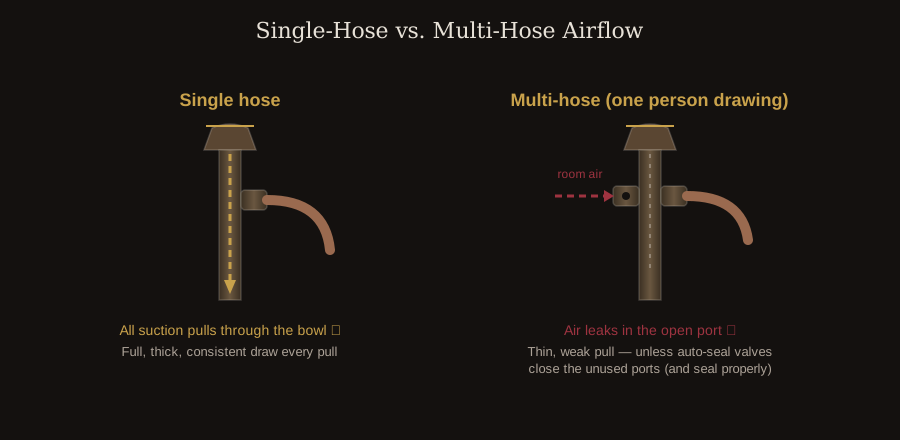
Multi-hose hookahs typically come in two or four hose configurations, and the way they work depends heavily on the design. Older or cheaper multi-hose hookahs simply have multiple open ports -- which means when one person draws, air rushes in through the other open hoses instead of pulling through the bowl. The result is a weak, thin draw that never quite feels satisfying. You end up working twice as hard for half the smoke.
Auto-seal systems changed the game for multi-hose hookahs. These use a small ball bearing inside each hose port that seals shut when it detects suction from another hose. So when person A draws, person B and C's ports seal off, and the full suction goes through the bowl -- at least in theory. In practice, auto-seal systems work reasonably well on higher-end hookahs but can be inconsistent on budget models where the tolerances are not as tight.
The thing that nobody really talks about is the timing issue. Even with auto-seal, if two people try to draw at the same time, neither gets a good pull. You end up in this awkward dance of waiting for each other, which somewhat defeats the purpose of having multiple hoses in the first place. I have been in plenty of sessions where everyone just naturally takes turns anyway, and you start wondering why you didn't just get a single hose pipe.
What About Smoke Quality and Flavour?
This is where the real difference shows up, and it is not even particularly close. A well-sealed single hose hookah will consistently produce thicker, more flavourful clouds than a multi-hose setup. The reason is simple physics -- undivided airflow means better heat management on the bowl, more consistent pulls, and a more even burn of the shisha tobacco. When the draw is split or inconsistent, you get hot spots on the bowl, uneven heating, and that harsh taste that tells you something is not right.
I have smoked the same brand and flavour on both setups back to back on a number of occasions, and the single hose version wins every time. The flavour is cleaner, the clouds are denser, and the session lasts longer because the tobacco burns more evenly. Multi-hose hookahs with auto-seal get close, but there is always a slight compromise in draw resistance that you can feel if you know what a proper pull should be like.
Is a Multi-Hose Hookah Better for Groups and Parties?
Here is where multi-hose hookahs do have a genuine argument. If you regularly host gatherings, having a two or four hose hookah on the table means people can grab a hose without waiting. It feels more communal, more relaxed -- nobody has to pass anything around, and the hookah becomes a centrepiece that everyone can dip in and out of. For a party or a large social setting, that convenience matters.
But I would argue the convenience comes at a cost. The smoke quality takes a hit, the maintenance is more demanding (more hoses to clean, more ports to check for leaks, more seals to replace), and multi-hose hookahs tend to be larger and heavier, which makes storage and setup more of a commitment. If you are smoking with two or three close mates, passing a single hose around is part of the experience and honestly takes about three seconds.
Where multi-hose really makes sense is in a lounge or cafe setting where the hookah stays on the table for an extended period and multiple people are coming and going. For home use, I think the trade-offs are rarely worth it — our setup guide covers getting a single-hose session right from the start.
What About Price and Maintenance?
Single hose hookahs are almost always cheaper for equivalent build quality, simply because there is less hardware involved. You are looking at one hose, one port, one set of grommets -- where as a multi-hose hookah needs additional ports machined into the stem, extra grommets, auto-seal components (on decent models), and of course multiple hoses included in the box. A solid single hose hookah might run you 40 to 60 quid — see our best budget hookah picks — where as a comparable quality multi-hose version could be 70 to 120.
Maintenance is significantly easier on a single hose setup too. One hose to clean, one port to keep sealed, and fewer points of failure overall. Multi-hose hookahs have a habit of developing small air leaks over time as the extra grommets and seals wear out, and tracking down where the leak is coming from can be genuinely frustrating. I spent a good hour once trying to figure out why my mate's four-hose hookah was pulling thin -- turned out one of the auto-seal bearings had corroded and was not seating properly.
So Which One Should You Actually Buy?
If I am being completely honest, a single hose hookah is the better choice for the vast majority of people. The smoke quality is superior, the maintenance is simpler, they are more affordable, and the passing ritual is genuinely part of the enjoyment. If you are a beginner, do not overcomplicate things -- start with a single hose and learn what a proper session should feel and taste like before introducing extra variables.
The only scenario where I would confidently recommend a multi-hose hookah is if you regularly entertain large groups and want the hookah to be a passive social feature rather than the focus of the session. In that case, invest in a quality model with proper auto-seal technology and be prepared to spend a bit more time on upkeep. Just know that you are trading some smoke quality for convenience, and once you have experienced a perfect single hose session, that trade-off is hard to ignore.
Single Hose vs. Multi-Hose at a Glance
| Single hose | Multi-hose | |
|---|---|---|
| Smoke quality | Best — undivided airflow | Compromised unless auto-seal |
| Draw | Full and consistent | Thin if a port leaks |
| Airtightness | Few joints, easy to seal | More ports, more leak points |
| Maintenance | Simple — one hose to clean | More hoses, seals and valves |
| Price for the quality | Cheaper for equal smoke | You pay for the extra ports |
| Best for | Almost everyone; solo and small groups | Lounges; passive group centrepiece |
Frequently Asked Questions
Is a single-hose or multi-hose hookah better?
For smoke quality, single hose wins almost every time — all your suction pulls through the bowl instead of leaking out unused ports. Multi-hose only makes sense as a passive centrepiece in a lounge or at a party, where the convenience of not passing a hose outweighs the drop in draw quality.
Can two people smoke a multi-hose hookah at the same time?
Only well if it has working auto-seal valves. Without them, when one person draws, air rushes in through the other open port and both get a weak, thin pull. Even with auto-seal, two people drawing at once split the airflow — in practice groups end up taking turns anyway.
What is an auto-seal valve?
A small ball bearing inside each hose port that seals the port shut when it senses suction from another hose. It is what lets a good multi-hose hookah draw properly with unused ports closed. Cheap multi-hose hookahs either lack them or use loose-fitting ones that never seal fully.
Can you turn a multi-hose hookah into a single-hose one?
Yes — plug the unused ports with the rubber stoppers most multi-hose hookahs include, or buy aftermarket ones. Sealing the extra ports removes the air-leak problem and gives you single-hose draw quality from a multi-hose pipe.
If you are comparing a single hose hookah against a multi hose hookah, the difference comes down to airflow, not price — here is what actually changes.


