
What Does a Purge Valve Actually Do?
The purge valve is one of those hookah components that most beginners either do not know exists or completely ignore for the first few months of smoking. It sits quietly on the side of your hookah stem, looking like a small metal cap or port, and unless someone shows you what it does, you might never think to use it. That is a shame, because the purge valve is one of the most useful features on a hookah and learning how to use it properly will immediately improve your sessions.
In simple terms, the purge valve allows you to blow stale or harsh smoke out of the hookah base without disrupting the water seal. When smoke has been sitting in the base for too long, or when the heat gets a bit too high and the smoke turns harsh, a quick blow through the hose pushes that old smoke out through the purge valve and lets you start fresh with the next pull. Think of it as a reset button for your session.
How Does It Work Mechanically?
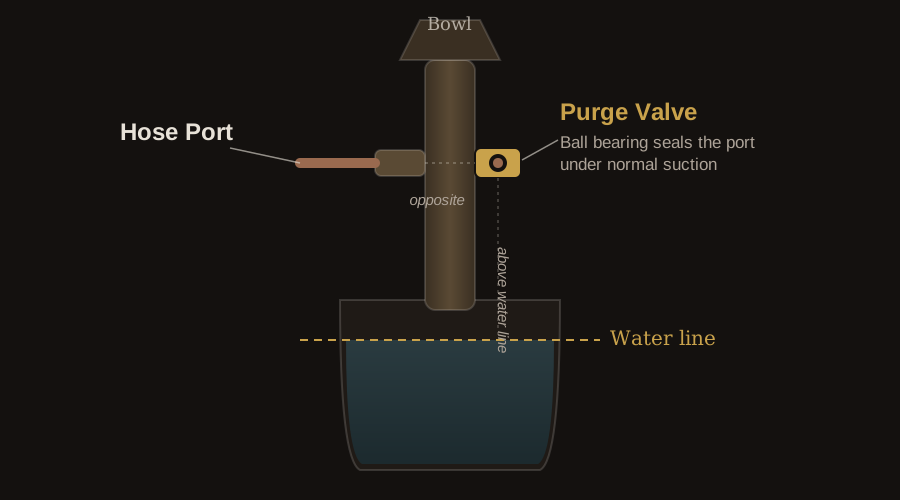
The mechanics are beautifully simple. Inside the purge valve housing, there is a small ball bearing (usually steel or glass) that sits over a hole in the stem. When you draw on the hose normally, the suction pulls the ball bearing down against the hole, sealing it shut -- this is what stops air from coming in through the purge port when you inhale. The smoke gets pulled through the bowl, down the stem, through the water, and up through the hose as normal.
When you blow gently into the hose instead of inhaling, the positive pressure pushes air down through the stem and into the base. That pressurised air needs somewhere to go, so it lifts the ball bearing off its seat and escapes out through the purge valve, taking the stale smoke in the base along with it. The moment you stop blowing, the ball bearing drops back down and seals the port again. It is a one-way valve system that only opens outward -- air can leave through it but cannot enter.
You will usually see the stale smoke puff out of the purge port in a little cloud, which is actually quite satisfying once you know what you are looking for. Some hookah models have a small cap over the purge that directs the expelled smoke, while others just have an open port. Either way, the function is identical.
Spring-Loaded vs Ball-Bearing: What's Actually Inside the Valve?
Almost every hookah purge valve you will come across — traditional Egyptian brass stems included — uses a free-floating ball bearing, not a spring. The ball sits loose in a small chamber over the port, and gravity plus the suction of a normal draw is enough to hold it against its seat. No spring is needed for the valve to seal; the pressure differential does all the work, which is why the mechanism stays reliable for years with nothing to fatigue or wear out.
A small number of aftermarket and higher-end replacement valves add a light spring behind the ball bearing. The spring adds a small amount of consistent closing pressure, which can help on a stem where the port is not perfectly vertical or where the ball is very light — without it, an off-angle port can occasionally let the ball sit slightly open at rest. In practice the difference is minor: a plain ball-bearing valve on a properly oriented port works exactly as well as a spring-assisted one, which is why most manufacturers do not bother with the spring.
If you are ever replacing a purge valve and are offered both types, either will work. The ball-bearing-only version is simpler, cheaper, and has been the industry default for decades.
Where Should the Purge Valve Sit on the Stem?
On a traditional hookah, the purge valve is positioned on the opposite side of the stem from the hose port, and above the water line. Both details matter, and neither is arbitrary.
Opposite the hose port: when you blow into the hose, the air travels down the stem and needs somewhere to go. Placing the purge directly across from the hose port gives the air a clear, short path out, rather than doubling back past the hose connection itself. It also keeps the two functions — drawing in through the hose, expelling through the purge — physically separated.
Above the water line: this is the more important of the two. The purge valve has to sit above where the water sits inside the base, in the air pocket at the top of the stem. If a purge port were positioned below the water line, blowing into the hose would just push air bubbles out through the water instead of expelling the stale smoke sitting above it — you would get bubbling and mess with none of the actual benefit. Every properly designed hookah stem accounts for this when the purge port is drilled.
If you are shopping for a hookah and comparing stems, a purge valve positioned high up near the hose connection, clearly above where the water sits when filled to the normal level, is what you want to see.
When Should You Actually Use the Purge?
Knowing when to purge is just as important as knowing how. The most common situation is when your smoke starts tasting harsh or burnt. This usually means the heat has been a touch too high and some of the smoke sitting in the base has gone stale. Rather than suffering through several harsh pulls waiting for it to clear, one or two quick purges will flush out the bad smoke and your next draw should be noticeably smoother.
You should also purge at the very start of a session, right after placing the coals on the bowl. The first bit of smoke produced as the shisha heats up is often thin and can taste a bit off -- it has not had time to develop properly. A quick purge after the first 30 seconds or so clears that initial smoke and sets you up for a much better first real pull.
Another good time to purge is if you have left the hookah sitting for a few minutes without smoking -- maybe you got distracted by conversation or stepped away briefly. Smoke that has been sitting in the base goes stale surprisingly quickly, and drawing it through the hose is never pleasant. A short purge before you resume smoking makes a real difference.
I personally purge lightly every few rounds of pulls as a matter of habit. It keeps the smoke in the base fresh and the flavor consistent throughout the session. Once you start doing it, you will notice the improvement and wonder how you ever smoked without it.
How Do You Purge Properly Without Making a Mess?
This is where a lot of people go wrong, and it usually ends with water going places it should not. The key is to blow gently and steadily -- not hard. You are not trying to force air through the system with brute strength. A gentle, controlled breath through the hose is all it takes to lift that ball bearing and release the stale smoke. You will feel the slight resistance give way as the valve opens, and you will see the smoke exit through the purge port.
If you blow too hard, a couple of things can happen, none of them good. The most common is that the pressure forces water up through the stem and into the bowl tray or even into the bowl itself, soaking your shisha and effectively ending that round of tobacco. I have seen people absolutely blast air through the hose and end up with water all over the table -- it is not a good look. A gentle puff is genuinely all you need.
One or two short, gentle blows is usually enough to clear the base. You do not need to purge for five seconds straight. Think of it as a quick breath out, pause, then resume inhaling normally. If the smoke is still harsh after two purges, the issue is probably your heat management rather than stale smoke in the base, and you should look at adjusting your coals instead.
What If Your Hookah Does Not Have a Purge Valve?
Some very basic or very old hookah designs do not include a purge valve, and honestly it is a noticeable drawback. Without one, stale smoke has nowhere to go except through the hose when you draw. If the session gets harsh, your only options are to wait it out, adjust the heat, and hope it improves -- or to lift the hookah stem slightly to release the pressure, which is awkward and breaks the seal.
If you are buying a new hookah, make sure it has a purge valve. It is a standard feature on any decent modern hookah and its absence is usually a sign that you are looking at a very budget model that has cut corners elsewhere too. A working purge valve is one of those non-negotiable features that separates a functional hookah from a frustrating one.
What Thread Size Does a Purge Valve Use?
There is no single industry-standard thread size for hookah purge valves, which catches a lot of people out when they try to order a replacement online. Thread size varies by manufacturer and even between production runs of the same brand, especially with traditional Egyptian and Syrian brass hookahs that are often hand-finished rather than machined to a fixed spec.
Rather than trust a number you have seen quoted in a forum thread, the reliable way to get a compatible replacement is to remove your existing valve (or the housing, if the ball has fallen out) and measure the threaded portion directly — both the outer diameter and the thread pitch, if you have calipers. Take that measurement, or the old part itself, to a hookah accessories retailer or include it when you message a seller online. Most retailers who stock replacement valves will confirm fit against a measurement or a photo before you buy.
If you do not have the original part to measure — for example, if you are adding a purge valve to a hookah that never had one — see the next section on fitting one from scratch.
How to Add a Purge Valve to a Hookah That Doesn't Have One
Older and more basic traditional hookahs are sometimes made without a purge valve at all. It is possible to add one, but it means modifying the stem permanently, so it is worth being deliberate about it rather than rushing in with a drill.
- Buy the valve assembly first. Aftermarket purge valve kits (housing, ball bearing, and often a gasket) are sold by most hookah accessory retailers. Buy the kit before you drill anything — the hole you cut needs to match the thread on the part you actually own, not a generic size.
- Mark the position carefully. Follow the same rule as factory stems: opposite the hose port, and comfortably above where the water sits when the base is filled to your normal level. Measure the water line with the base actually filled and attached, not by guessing, and mark the drill point at least an inch above it to leave margin.
- Drill a pilot hole, then step up. Start with a small bit to keep the hole from wandering on the brass, then step up gradually to the size specified by your valve kit. Brass is soft and forgiving compared to steel, but it still pays to go slowly and keep the drill square to the stem wall.
- Thread in the valve and check the seal. Most kits either self-tap into the drilled hole or use a matching threaded insert. Once it is in, fill the base with water as normal and check for leaks around the new fitting before you use it for a real session.
This is a genuinely permanent modification, so it makes the most sense on a hookah you intend to keep long-term rather than a budget piece you might replace soon anyway. If you are in the market for a new hookah instead of modifying an old one, it is far simpler to just choose a model that already has a purge valve built in.
Should You Leave the Purge Valve Open or Closed?
This is one of the most common questions about purge valves, and the answer is that it is not really a choice — the valve manages itself automatically. The ball bearing mechanism means the valve is always closed under normal suction (when you inhale, the pressure differential pushes the ball onto its seat and seals it). You do not need to open or close it manually; it opens only when you actively blow through the hose to purge.
That said, some smokers ask whether to remove the ball bearing entirely to improve airflow. Do not. Without the ball bearing, water from the base will be pushed up through the open port the moment you blow out, spraying into your tray and potentially onto your coals. The ball bearing is what makes the one-way valve work — it lets smoke out without letting water in.
If your purge valve feels stuck or is not responding when you blow, the most common cause is a ball bearing that has become sticky with residue. Remove the valve cap, rinse with warm water, and dry thoroughly. A clean ball bearing should move freely and seal cleanly every time.
Common Purge Valve Problems and How to Fix Them
The most frequent issue is a stuck ball bearing. Over time, residue from the smoke and moisture can cause the ball bearing to stick to its seat, which means it does not lift when you blow and the purge does not work. The fix is simple -- unscrew the purge valve cap, remove the ball bearing, give everything a quick clean with warm water and a bit of washing up liquid, dry it off, and put it back. This should be part of your regular hookah cleaning routine but it is something most people forget about.
Another issue is a ball bearing that does not seal properly, which causes air to leak in through the purge port when you draw on the hose. This gives you a weak, airy pull because the suction is being split between the bowl and the leaky purge. Usually this means the ball bearing has corroded or is the wrong size for the port (common on cheaper hookahs or if a bearing has been replaced with a non-original). A replacement ball bearing costs practically nothing and can usually be sourced from any hookah accessories supplier.
If you notice water bubbling up through the purge valve while you are drawing normally, it usually means the ball bearing is missing entirely or has fallen out of position. Take the cap off, check the bearing is there and sitting correctly, and reassemble. It takes about 30 seconds and saves you from a frustrating session of poor draw and water splashing where it should not be.
The purge valve is one part of your setup — see our full guide to how to set up a hookah and our foil vs HMD.


